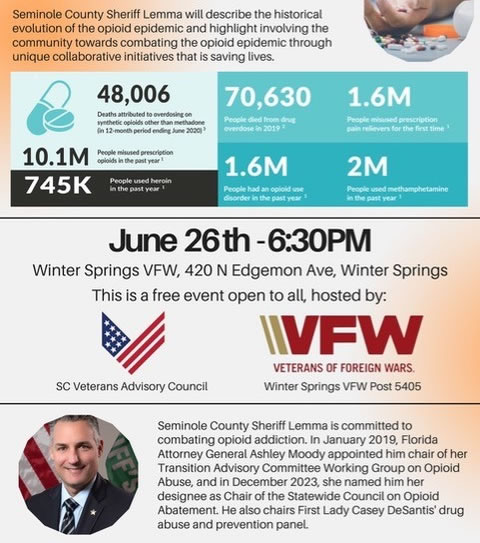
It is with great pride that I announce we have now had two Veteran Art Shows to showcase the unique artwork from 5 of our local veteran artists! The interaction between the veteran artists and the patrons was beyond my wildest expectations! Not only did the patrons ask the veterans to talk about how their artwork came to be, but the veterans felt a sense of empowerment to tell their story on the journey they have made to help overcome their fears and mental anguish they experienced in the military. At both showings, each veteran captured the hearts of the patrons and sold several pieces of their artwork! We will be hosting a Veteran Art Show at our upcoming February 13th luncheon, and in addition, we will be given a briefing by Recreational Therapist MaryBeth Verbinski from the VA Lake Nona. MaryBeth has been a steadfast supporter of our “Healing Through Expression” program, and our chapter supports her monthly veteran’s art class at Lake Nona with donations of art supplies, drinks, and refreshments. There is far more than art therapy to the VA’s Recreational Therapy program to address suicide and PTSD, and I encourage you to attend the luncheon to hear the innovative ways the VA is helping our veterans who are dealing with the results of their military service. Some of the artwork on display will be for sale, and we can take cash, check or credit card as payment (all sales go to the veteran). We will also be partnering with the Museum of Military History (5210 West Irlo Bronson Memorial Hwy, Kissimmee, Fl) for a museum fundraiser on Sunday, February 11th for another showing of artwork for our veterans. There is free admission to the museum between 10:00-6:00pm, and I can attest that the museum is worth a visit! See attachment.
I hope to see you at our luncheon on February 13th.
And for our March luncheon …. save the date of March 12th for a rare chance to hear from Dr. Lourdes Benes, a practicing neurologist who specializes in age-related cognitive and mobility issues as we age. In April, our usual 2nd Tuesday luncheon is replaced with our JROTC Awards Luncheon, this year on Saturday, April 20th. Don’t miss it.
Next MOAA CFC Event is February 13th @ 11:30 am $24 per person
Our next Chapter meeting is a luncheon on February 13th at 11:30 am at the DoubleTree Orlando East – UCF Area. The DoubleTree is located at 12125 High Tech Ave, Orlando. Please note, the hotel sits back off the road and may not be immediately visible. We are very fortunate to have a special briefing on the Lake Nona and Lake Baldwin Recreational Therapy program to combat suicide and veterans with PTSD. MaryBeth Verbinski is the Recreational Therapist we work with on implementing our “Healing Through Expression” program. In addition, we have invited several veteran artists to set up their artwork for viewing or sale, and they are looking forward to discussing how art therapy has transformed their lives after leaving their respective military service. The DoubleTree is serving London Broil with Mushroom Sauce on the side, Rosemary Roasted Potatoes and California Vegetable Melody. Dessert will be the Chefs selection, and a warm Doubletree Cookie. Please RSVP NLT February 9th to this email, or email lorraineholland@hotmail.com or call 407-221-1388. Come out to enjoy a wonderful event with your fellow chapter members! Save-the-date for our next luncheon on March 12th where our guest speaker is Dr. Lourdes Benes, a board-certified Neurologist in Cognitive, Behavioral and Movement Disorders. (www.NeurologyOne.com) Dr. Benes will enlighten us on age-related cognitive and mobility issues as we age. We all can use helpful tips to keep our minds and bodies sharp as we get older! And we will learn how to spot forgetfulness versus dementia setting in. Dr. Benes had a Fellowship with the VA Medical Center Cognitive, Behavioral & Movement Disorders.
Florida Council of Chapters Website
The Florida Council of Chapters is rolling out a new website following the retirement of John Snyder, our former Webmaster. John’s website was a custom created site that only he knew how to operate; it served our needs for many years and his efforts over the years was greatly appreciated. The new website features a new look and can also be easily used by Chapters who don’t have their own customized website, like we do.
Go to www.flmoaa.org to check it out. Once the February Communique’ newsletter is published it, and all following newsletters, will be posted there as well.